

From precision instruments to heavy-duty vehicles, almost all moving parts rely on bearings, which play a crucial role in the overall operation of these machines. Given the wide range of bearing applications, various types of bearings are designed for different operating conditions based on factors such as load requirements, operating speed, and alignment requirements. In the heavy-duty truck, construction machinery, and off-road vehicle sectors, vehicles often operate in extreme environments such as mud, shock loads, dust, high temperatures, and continuous vibration, placing extremely high demands on bearings. Choosing the wrong type of bearing can not only lead to rapid bearing failure but also cause vehicle malfunction.
Tapered Roller Bearings
These bearings are widely used in axles, wheels, and transmissions. Their typical structural features include chrome steel material, steel cage, and C3 clearance. Tapered roller bearings also have strong resistance to shock loads and can withstand both radial and axial loads, making them ideal for environments subject to frequent shocks and vibrations.
Deep Groove Ball Bearings
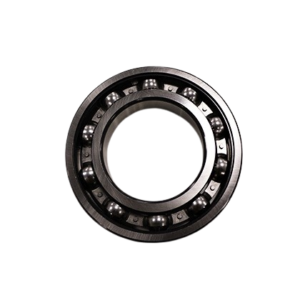
The main characteristics of deep groove ball bearings are good high-speed performance, low friction coefficient, and compact structure. Although they can only withstand radial loads, with sealed designs (rubber seals (2RS), metal seals (ZZ)) and high-performance lubrication, they can also perform well in off-road vehicles, such as in engine auxiliary systems or small transmission components.
Wheel Hub Bearing Units
Integrated wheel hub bearing units are widely used in heavy-duty trucks, off-road SUVs, and UTVs. Their main features are compact structure, good sealing performance, and easy installation. They not only effectively prevent mud, water, and contaminants from entering but also improve the accuracy of bearing preload.
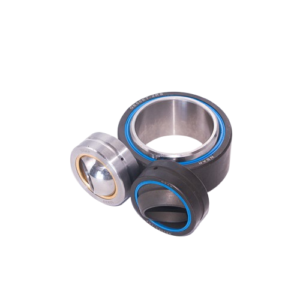
Needle roller bearings are mainly used in power take-off shafts, transmission system components, and pivot joints. Their main characteristics are compact structure and high load capacity. Due to their small cross-sectional height, they are particularly suitable for areas with limited space.
What Bearing Specifications Should Buyers Evaluate?
When purchasing bearings for heavy-duty and off-road vehicles, buyers should consider not only price and delivery time but also conduct a comprehensive evaluation based on technical specifications. The following key specifications are crucial for purchasing managers and engineers:
Dynamic Load Rating (Cr): Defines the load the bearing can withstand after more than one million revolutions. For heavy-duty applications, the load rating is typically between 15,000 and 30,000 Newtons.
Material: The standard material is chromium steel (GCr15). In corrosive environments, stainless steel (440C) is used.
Sealing System: For dust and water resistance, use double-lip or triple-lip seals. In dirty or wet environments, rubber seals (RS/2RS) are recommended.
Cage Type: Steel cages are suitable for high-load, high-speed applications. Polymer cages offer lower noise and lighter weight, suitable for low-speed machinery.
Clearance (e.g., C3/C4): For applications involving heat and vibration, increased clearance (C3 or C4) helps accommodate thermal expansion and shaft movement.
Grease Type: Off-road bearings should be pre-filled with high-temperature lithium-based or molybdenum-based grease to withstand harsh operating conditions.
In summary, when selecting bearings for heavy-duty and off-road vehicles, buyers should focus on key parameters such as load capacity, speed limits, sealing performance, material quality, lubrication method, and service life to ensure the equipment operates reliably and stably under extreme conditions.
In heavy-duty and off-road vehicles, bearings are frequently subjected to high loads, impacts, and harsh environments. Even high-quality products will experience wear over time. Timely replacement of bearings can prevent equipment downtime and costly repairs.
The following are common signs of failure:
Common failure indicators:
Grinding, buzzing, or rumbling noises during rotation
Overheating in the hub or axle area
Irregular tire wear (applicable to wheeled vehicles)
Visible corrosion or metal particles found during inspection
Recommended replacement intervals:
Light trucks and trailers: Every 100,000 to 150,000 kilometers
Off-road utility vehicles and ATVs: Annually or every 300-500 operating hours
Heavy-duty construction and mining vehicles: Replace every 12-18 months, depending on usage and environment.
Inspections should include checking for looseness, discoloration, seal integrity, and grease leakage.
As a bearing manufacturer and global supplier, NSAR offers:
Heavy-duty bearing solutions for extreme environments
Customizable sealing, lubrication, and material options
Consistent quality for construction, mining, and agricultural equipment
Global supply with overseas warehouses in the USA
Copyright © NSAR Bearings. All rights reserved. Privacy Policy

