

Open bearings are rolling bearings without built-in seals or dust covers; all internal components are exposed. Open bearings are typically used in clean, well-lubricated environments, such as inside gearboxes or machinery where the bearings are continuously immersed in oil. Because there is no enclosed structure, open bearings rely on the machine’s lubrication system and cannot prevent contaminants from entering on their own.
Advantages of open bearings
There are several advantages:
1. Better heat dissipation. Open bearings have only one side sealed, preventing excessive heat buildup inside the bearing, resulting in better heat dissipation and effectively extending the bearing’s lifespan.
2. Lower friction loss. Compared to sealed bearings, open bearings have a lower coefficient of friction and less power loss. This is very important for applications requiring high efficiency, such as electric motors.

Sealed bearings are bearings with seals (usually rubber or polymer) on one or both sides, which completely enclose the internal structure. The seals make slight contact with the inner ring, forming a barrier that prevents lubricant leakage and contaminant entry. Sealed bearings are usually pre-lubricated with grease and require virtually no maintenance. Therefore, they are ideal for dirty or wet environments, or any application where the bearing needs protection from contamination and frequent maintenance is not possible.
Sealed Bearings
Bearings with seals or covers and filled with grease are widely used. The advantage of grease over lubricating oil is that it is easier to maintain lubrication and is less prone to deterioration.
The advantages of sealed bearings are that they require no lubrication for life and are suitable for normal light-load conditions at medium to low speeds. Sealed bearings typically have lower production costs and do not require regular relubrication or grease replenishment.
Therefore, these bearings are widely used in electric motors, fan motors, and automated equipment.
Types of Bearing Seals: Contact Seals vs. Non-Contact Seals
In sealed bearings, manufacturers mainly use two sealing designs: non-contact seals (or dust covers) and contact seals. Each type of seal strikes a different balance between protection and friction:
Non-contact (shielded): These seals/shields have a small gap between the inner ring and the seal, with no physical contact. This design avoids additional friction, thus reducing torque and heat generation, but its contamination protection is generally less effective. (Metal shields marked “Z” or “ZZ” are common non-contact housings.)
Contact seals: These seals are in close contact with the inner ring, forming a tight barrier. Contact seals provide maximum protection against dust, water, and other contaminants, and offer optimal lubrication. However, the disadvantage is that friction and operating temperature will increase slightly due to the contact. (Rubber seals marked “RS” or “2RS” are typical contact seals.)
When choosing a seal type, consider the application speed, allowable friction coefficient, and environment. For high-speed or low-torque applications in relatively clean environments, non-contact seals may be more suitable. In harsh environments or when exposed to adverse conditions where protection is critical, contact seals are a better choice.
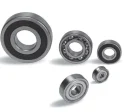
The main advantages of sealed bearings include:
Contamination protection: Sealed bearings excel at preventing dust, dirt, and moisture from entering. Their integrated seals act as a barrier, significantly reducing contaminant ingress compared to open bearings or even shielded bearings.
Lubricant retention: The seals lock the grease inside the bearing. This means the grease remains within the bearing for its entire lifespan, ensuring continuous lubrication and performance without the need for regular regreasing.
Extended bearing life: By preventing contaminants from entering and ensuring the lubricant stays where it’s needed, sealed bearings typically last longer than open or shielded bearings under the same conditions. Less dirt and optimal lubrication mean slower wear and fewer failures.
Reduced maintenance: Sealed bearings are generally maintenance-free. Users do not need to add grease regularly; the lubricant injected at the factory is usually sufficient for the bearing’s lifespan. This reduces maintenance frequency and labor costs.
Versatile applications: Due to their self-contained sealed protection structure, sealed bearings are suitable for a wide range of applications, especially in harsh or outdoor environments. From agricultural equipment to wheel hubs, sealed bearings are ideal when reliability is needed in dirty environments.
Bearing shields and seals serve similar purposes – they both protect the bearing’s interior from contamination and help retain lubricant – but they are not the same thing. Their differences lie in their materials, design, and performance:
Structure: A shield is typically a thin metal disc located in a groove in the outer ring, not in contact with the inner ring. A seal is usually made of rubber or polymer and makes slight contact with the inner ring.
Protection Level: Because seals create a tighter barrier, they offer a higher level of protection against dust and liquids (including moisture or water splashes) compared to shields. Shields primarily block larger particles and dust but cannot completely block water or fine debris.
Friction: Seals are in contact with the inner ring, so sealed bearings have slightly more friction (and operating torque) than shielded bearings. Shields are non-contact, adding almost no friction – which is why shielded bearings rotate more smoothly.
Lubrication and Maintenance: Sealed bearings are typically pre-lubricated at the factory and can operate without additional lubrication (the seal prevents grease leakage). Shielded bearings may also be pre-lubricated, but because they are not completely sealed, the grease may eventually leak or dry out, meaning that regular relubrication may be required for long-term use.
In short, a shield is a looser metal barrier, while a seal is a tighter rubber barrier. It is this fundamental difference that often makes sealed bearings offer better protection, but with slightly higher rolling resistance than shielded bearings.
This is where the cost differences become more significant. Cost Comparison
Open Bearings – Ongoing Costs:
Requires regular lubrication
Maintenance labor costs
Higher risk of contamination
Shorter lifespan in dirty or wet environments
Sealed Bearings – Cost Advantages:
Lifetime pre-lubrication
Minimal or no maintenance required
Reduced lubrication costs
Reduced unplanned downtime
Over time, the maintenance and labor costs of open bearings can easily exceed their initial cost savings.
Winner in Operating Costs: Sealed Bearings
Bearing Life and Downtime Costs
Bearing failures often lead to machine downtime, production losses, and repair costs.
Open bearings exposed to dust, water, or chemicals may fail prematurely.
Sealed bearings significantly reduce the risk of failure due to contamination.
In applications where downtime costs are high, sealed bearings offer significant cost advantages by extending maintenance cycles and improving equipment reliability.
Total Cost of Ownership (TCO)
To understand true cost-effectiveness, consider the Total Cost of Ownership:
Total Cost of Ownership (TCO) = Acquisition Cost + Maintenance Costs + Downtime Costs + Replacement Costs
While sealed bearings have a higher upfront cost, they typically offer the following benefits:
Reduced replacements
Lower maintenance labor
Reduced downtime
Longer service life
In many industrial applications, sealed bearings reduce the total cost of ownership over the entire lifespan of the equipment.
NSAR’s bearing experts are ready to help you:
Reduce maintenance costs
Increase equipment uptime
Extend bearing life
Optimize your overall bearing budget
Contact NSAR Bearings today for expert advice or to request a customized quote for your needs.

Copyright © NSAR Bearings. All rights reserved. Privacy Policy

