1111-1112,SINOTRANS BUILDING,NO.368.,NORTH YOUYI STREET,SHIJIAZHUANG CITY,050071 CHINA
xiuguo1
X
TC Oil Seal
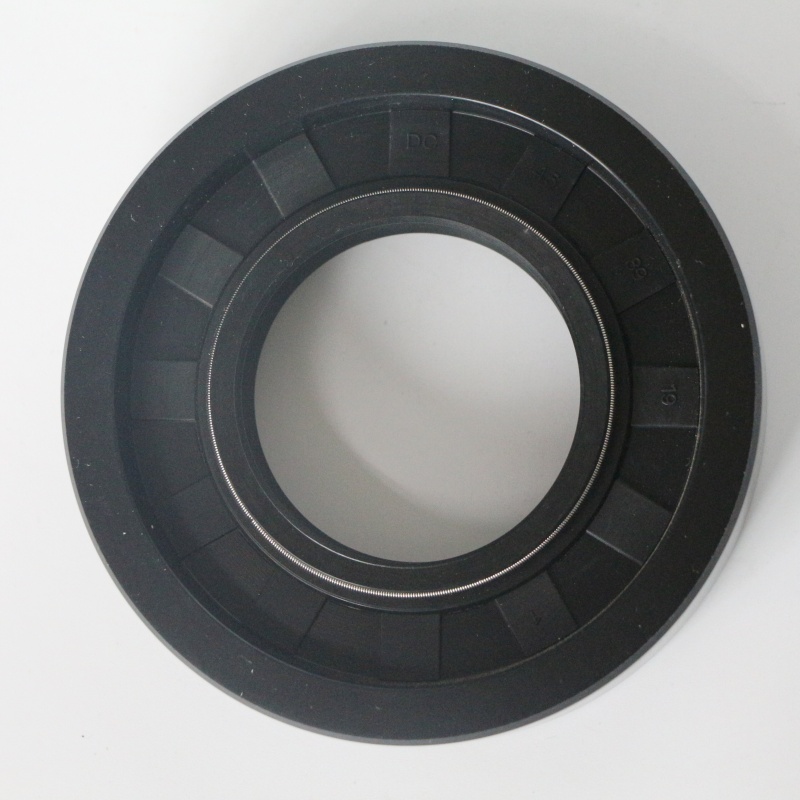
The TC Oil Seal is a low-pressure dual lip radial seal a with garter spring to provide protection from contaminants. The rubber covered OD improves the OD sealing ability. The internal face of the steel case is not fully rubber covered.
The TC oil seal is a low-pressure, double-lip radial seal with a garter spring for effective contamination protection. One of the most commonly used Oil Seal Types in industry, the TC oil seal features three key features:
(Note: The "T" designates a double-lip construction (primary lip for oil protection, secondary lip for dust protection), and the "C" designates a rubber-coated metal frame.)
The outer diameter is rubber-coated for enhanced sealing performance. The inner surface of the steel housing is not completely rubber-coated.
Key Features and Material Selection
Design: Double lip for improved sealing performance
NBR (nitrile rubber): Excellent chemical resistance and flexibility
FKM (fluoroelastomer): Suitable for high temperatures and harsh chemical environments
Steel case: Typically coated with a corrosion-resistant coating
Spring-loaded inner lip: Maintains close shaft contact
Performance Advantages: The double-lip construction simultaneously blocks external dust (dust lip) and internal oil leakage (primary sealing lip), maintaining a stable seal at speeds of 30 m/s and operating temperatures of 200°C.
Proper Installation Guidelines
Thoroughly clean the shaft and bearing housing surfaces.
Lubricate the sealing lip before installation.
Use a seal compression tool or flat-head screwdriver to apply pressure evenly.
Ensure the seal is straight and flush in its housing.
Tip: Avoid direct hammering to prevent deformation.
TC stands for Double Lip Overmolded Cone Seal. This double-lip seal with a self-energizing spring is primarily used to prevent oil leakage and dust contamination in mechanical equipment.
Definition and Structural Characteristics
Applications and Classifications
TC oil seals are a subtype of cone seals and play an important role in the oil seal classification system:
Applications: Widely used in rotating parts requiring lubrication, such as automotive engine crankshafts, transmissions, and hydraulic systems, covering gasoline/diesel engines, industrial pumps, and other equipment.
Technological Evolution
Modern TC oil seals continue to improve performance through structural optimization, such as the introduction of a wavy lip design to enhance hydrodynamic effects. Some models utilize hydrogenated nitrile rubber to increase high-temperature resistance up to 150°C.
Q&A: Frequently Asked Questions About TC Oil SealsQ: What does "TC" mean in TC oil seals?
A: It refers to a double-lip rubber seal with a metal housing.
Q: What is the service life of a TC oil seal?
A: Typically 3,000 to 5,000 hours, depending on usage and conditions.
Q: What is the tolerance of TC seals?
A: Typically ±0.1 mm to ±0.3 mm, depending on application specifications.
Q: Can TC seals be reused?
A: Reuse is not recommended. They are designed for single-use.
Q: What lubricant should I use?
A: Mineral oil for NBR and synthetic or ester-based oil for FKM.