Bearings are the unsung workhorses silently operating inside almost all rotating machinery. When bearings perform well, equipment runs smoothly. However, when they fail, problems such as vibration, noise, or overheating quickly arise. Two of the most frequently asked questions by engineers, purchasing personnel, and maintenance teams are: Which tipo de rolamento is best suited for radial loads? And why does bearing temperature increase?
This article will explain these two questions in a clear and easy-to-understand manner.
Which types of bearings are used to handle radial loads?
Radial loads act perpendicular to the shaft axis. Most electric motors, pumps, gearboxes, conveyors, and agricultural machinery primarily experience radial forces. Choosing the right bearing type is crucial for extending service life.
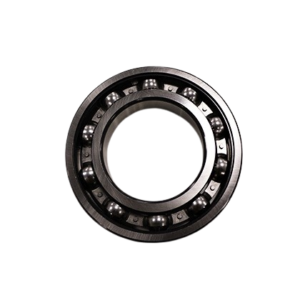
1. Rolamentos rígidos de esferas
Deep groove ball bearings are the most widely used bearings for radial load applications.
Why they are effective:
Primarily designed to handle radial loads
Can withstand moderate axial loads in both directions
Low friction and high-speed performance
Simple and cost-effective design
Typical applications:
Electric motors, fans, household appliances, industrial machinery
2. Cylindrical Roller Bearings
When radial loads increase, cylindrical roller bearings are often the preferred choice.
Main advantages:
Larger contact area than ball bearings
Higher radial load capacity
Suitable for high-speed and high-load conditions
Typical applications:
Gearboxes, machine tools, compressors, rolling mills
3. Needle Roller Bearings
When space is limited but radial loads are still significant, needle roller bearings are an ideal choice.
Reasons for choosing them:
Slim cross-section
High radial load capacity despite their small size
Ideal for compact machinery designs
Typical applications:
Automotive transmissions, power tools, small industrial equipment
4. Spherical Roller Bearings
For extremely heavy radial loads and shaft misalignment, spherical roller bearings are the best solution. Main Advantages:
Extremely high radial load capacity
Self-aligning design
Performs well in harsh and vibrating environments
Typical Applications:
Mining equipment, paper mills, cement plants, agricultural machinery
Why do bearing temperatures rise?
Increased bearing temperature is often an early warning sign. Understanding the causes helps prevent costly failures.
1. Overloading
When a bearing is subjected to loads exceeding its design capacity:
Higher friction between rolling elements.
Increased internal pressure
Rapid heat buildup
Result: Accelerated wear and overheating
2. Improper Lubrication
Lubrication problems are the most common cause of increased bearing temperature.
Too little grease or oil: Metal-to-metal contact increases friction.
Over-lubrication: Churning generates extra heat.
Wrong lubricant type: Mismatched viscosity leads to poor oil film formation.
3. Improper Installation or Misalignment
Improper installation can lead to:
Uneven load distribution
Increased internal friction
Abnormal heat generation
Even minor deviations can significantly increase operating temperature.
4. Contamination
Foreign matter inside the bearing:
Damaged raceways and rolling elements
Increased friction
Reduced lubrication effectiveness
This leads to rapid temperature increase and premature failure.
5. High-Speed Operation or Insufficient Heat DissipationAt high rotational speeds:
Friction naturally increases
Poor housing ventilation can lead to heat buildup.
If heat cannot dissipate, the temperature will continue to rise.
Bearing Type and Temperature Relationship
Choosing the right radial load bearing directly impacts temperature control. Even with proper lubrication, undersized or unsuitable bearings will generate excessive heat. The right bearing selection, proper installation, and appropriate lubrication work together to maintain stable temperatures and extend service life.
For most radial load applications, deep groove ball bearings are the preferred solution; however, when loads increase or operating conditions become more demanding, roller bearings are required. Furthermore, increased bearing temperature is never accidental—it usually indicates problems with load, lubrication, alignment, or contamination. By understanding the selection criteria and causes of temperature rise in radial bearings, you can improve reliability, reduce downtime, and protect your equipment investment.
Whether you are selecting bearings for motores elétricos, agricultural machinery, conveyors, or heavy industrial equipment, Rolamentos NSAR provides dependable solutions backed by technical experience and global supply capability. Our goal is not only to supply bearings—but to help our customers improve efficiency, reduce maintenance costs, and extend equipment life.